In this tutorial am telling how to discover if the family address or the ancestor’s job are mentioned, or to understand if a relative or parent was dead or alive at the moment of the record.
I am showing how to spot troublesome births, marriages between cousins, and unusual causes of deaths, and I am revealing a few tricks
If you watch it and find it useful for your research, let me know!
I will follow up with other two videos:
How to spot if an ancestor was an abandoned baby (an important part which I forgot in this video!)
Update to 2026 A.I. (in this video I am suggesting how to use it, but in the meantime much has changed with A.I. and I will update my suggestions)
Many Italian surnames coincide with a place name – a nation, a region, city, town, village or hamlet – and the reasons may be different, sometimes even surprising.
In this post I will try to answer your questions about it, for example:
If my ancestor’s surname is also a place name, does this mean that he was coming from that place?
Was the place named after my family, or the opposite?
Disclaimer: this is not the result of a specific study, it’s only the consequence of my experience “on the field” and so, my approach will be very practical.
If you are from America, Canada or Australia, you are very used to surnames which are also place names, as there are many examples in your Countries, such as Washington, Vancouver and Sydney.
In these three cases, and in most cases in your Countries, a new city was named after a famous person, as a tribute.
This is situation is very rare in Italy and the reason is simple: most cities and towns, villages and rivers, mountains and gulfs were named long before people started to have surnames!
THE ORIGIN OF SURNAMES
Let’s make it quick and simple: surnames started to be used in the late Middle Age, but they were officialized only at the end of the century 1500, adopting as surname the nickname a person was known with, which could be his job, the name of his father, a physical characteristic, his place of origin or something else (there may be many examples).
Here are the categories that I identified, referring to surnames which are also place names.
PEOPLE NAMED AFTER THEIR PLACE OF ORIGIN
The majority of people whose surname is also a place name, may be native of that place.
However, this means that they were living in that place before the introduction of surnames, many centuries ago!
For example, if in the Middle Age a family was moving from Monza to another place (let’s say Milan), they were identified as “those from Monza”, and when surnames were formally introduced, it is possible that they adopted the surname Monza, because this is how they were known in Milan.
This means that you will never find traces of your Monza family in Monza, because they were called Monza only after leaving this city and settling in another one.
Besides this, the adoption of the surname Monza may have happened before the introduction of parish records, and it may be very difficult or even impossible to get to the origins of it.
The above example is a good one, actually.
There are, in Italy, 495 families with surname Monza
Guess how many are living in Monza? No one!
Of course, because Monza was the surname which was given to people whose distinguishing characteristic was that they were coming from Monza, but there was no reason for a person living in Monza to get the nickname or surname Monza, as it was not a distinguishing mark.
This is true also for surnames which are adjectives instead of nouns, such as Lombardi, Siciliano, Napolitano, Spagnoli (from Lombardy, Sicily, Naples or Spain respectively).
If your ancestor’s surname is GALLO or GALLI, you are in the same group, too!
Gallo has two translations: one is rooster, which is not the meaning of the surname, the other one is Gaul, thus French: your ancestors were then French people who settled in Italy some time in the distant past.
PLACES NAMED AFTER THE PEOPLE WHO WERE LIVING THERE
So, if your surname is Roma, I am sorry if you are disappointed to discover that the city was not called after you family!
On the other hand, if your ancestors were coming from a small hamlet, the place may actually have been called after them!
Imagine a small rural Italian town, a few centuries ago. Outside the town center, scattered in the countryside, are a handful of poor farmhouses, inhabited by families of farmers.
How do you call those places? Of course, like the people who are living there!
How can you recognize if the place took its name from the family, or if it’s the family who was named after the place because it was their place of origin?
Here is a very practical way (not 100% sure, but almost): check if there are still families living in that place, with that surname!
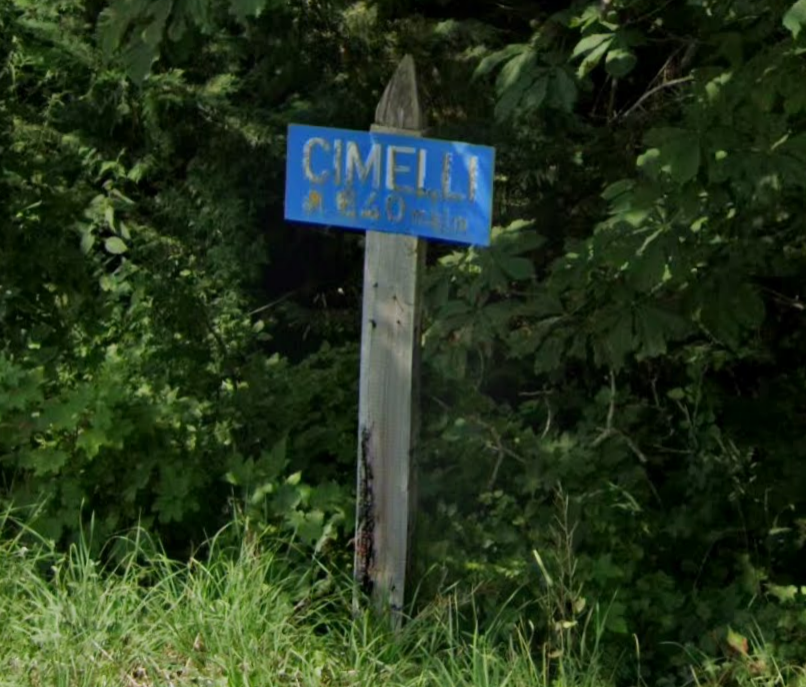
Here is an example: Cimelli is a surname and also the name of the hamlet of a town in Emilia Romagna. There were – and still are – families with the surname Cimelli living in Cimelli, so their surname cannot be a distinguishing mark, it did not suggest that they were “coming from Cimelli”.
For this reason, it is very likely that the place was named after the people who were living there.
Another example is even clearer: it’s another minuscule hamlet of a tiny town in Piedmont, and its name is Delaurenti, which means “(son) of Lorenzo”.
It is obviously a surname, a patronymic, not a place name. It was called after the family who was living there, whose surname was Delaurenti.
PLACES NAMED AS A TRIBUTE
So, a person named after a place, to indicate the origin, or a place named after a person to indicate the residence… No tributes like for Washington?
Most places in Italy had already their names when people did not have surnames yet, so how could they be re-named to honor a famous person?
In a few cases they did, adding their important citizen’s surname to the town’s name. Here are a few examples:
Castelnuovo Nigra, in Piedmont, renamed adding the surname of its famous citizen Costantino Nigra (poet and politician)
Andorno Micca, in Piedmont, renamed to honor Pietro Micca, a war hero who died in 1706
Camnago Volta, a hamlet of Como where the famous chemist and physicist Alessandro Volta had lived
In these cases, if your family surname matches with that of the tributed person, your ancestors may actually be native of that town, and possibly also related with the famous person!
PEOPLE NAMED AFTER A RANDOM PLACE
What about Rosa Teodosionopoli from Pellegrino Parmense?
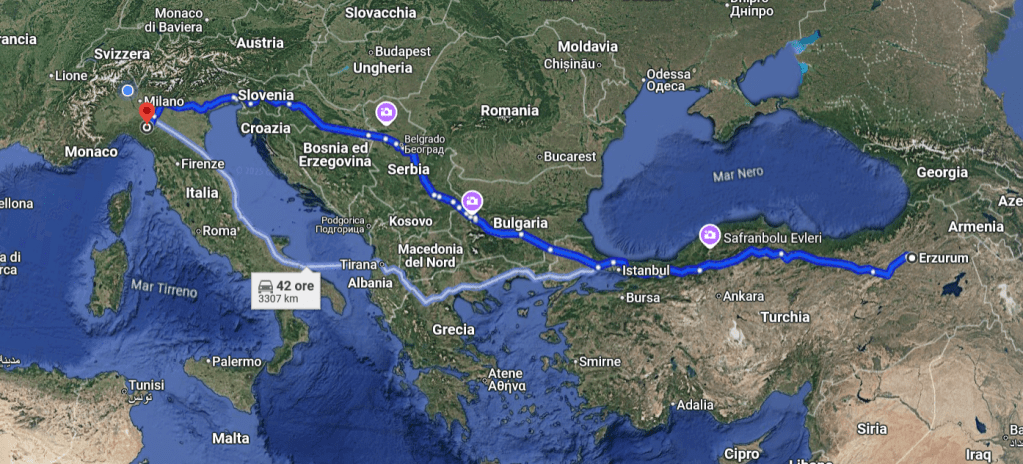
Teodosionopoli (Teodosiopoli, actually) is the ancient name of a city in Anatolia, Turkey, whose modern name is Erzurum.
Which amazing family history is hidden behind the surname of this person?
Were her ancestors actually born in the exotic city of Teodosiopoli?
Of course not. No historical circumstance would ever explain why a migrant from Teodosiopoli ended up in Pellegrino Parmense, in Emilia Romagna, but even if it would, the migrant would have been probably nicknamed Turco: Turkish.
No wonderful family history for Rosa, unfortunately: she was a foundling, and this is the explanation of her surname.
When foundlings were abandoned at a hospital, they were given a random name and surname. In many cases, the inspiration for the surname was coming from a dictionary or encyclopedia, and toponyms were often used.
How to spot if a surname indicates the real origin of the family or if it’s an invented surname?
One way could be to analyze how far are the two places: the birth place and the place name used as surname.
If the origin of the family was from a very small village in Calabria who migrated to a distant region, the nickname would have probably been Calabrese, which was enough to identify the family.
If the surname points at a small town which is very far from the birthplace, it is probably not related to the place of origin.
If the surname is an exotic place name such as Acapulco, it is surely the surname of a foundling.
If the surname is not very spread out in the area, and it looks like your family is the only one family with that surname, it is probably so, and your ancestor was a foundling.
I hope you found this post useful to the discovery of your family history!
After writing a post about the most beautiful archive found so far, here is a selection of the WORST ARCHIVES I had the chance to work in.
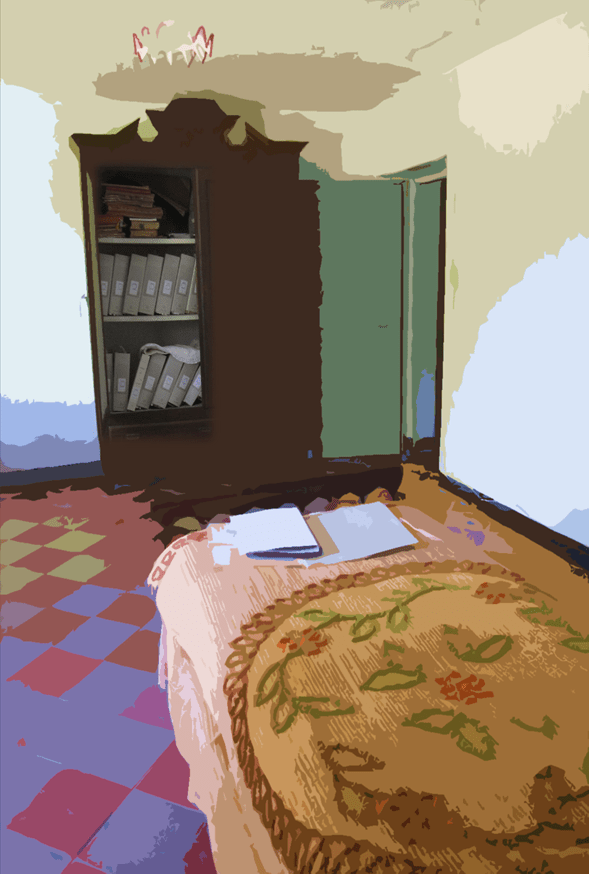
It is just for a laugh, not to criticize. For this reason, I made the places not recognizable (I hope) with a strong post-processing and effects-addition on the original pictures, so that nobody would feel bad about it.
These three parish archives are in Piedmont.
THE REGISTERS ON THE FLOOR
I swear it was not my idea, it was the parish cooperator who pulled them out of the furniture and laid them on the carpet, because all other surfaces were covered with a variety of different stuff.
So, I mostly worked on my knees on the floor.
I can confirm that the carpet was very soft and the registers did not suffer any mishandling or damage!
THE BEDROOM
When you are in a very small town with a very small parish and a very small priest’s house that hosts a parish archive, where is the archive?
In the kitchen? In the bathroom? Of course, neither of them is suitable.
It’s in the bedroom!
Fancy a nap?
WORKING WITH A VIEW
OK, this was another archive without a table, without a chair, without a bed, without a surface to put the registers on. No carpet this time, and the floor was filthy.
The best solution was to use the windowsill, after having roughly cleaned it from dust, pieces of concrete, spider webs and dead stink bugs (and I was lucky that it had just stopped raining).
Genealogical research = registers, archives, folders, records, shelves…
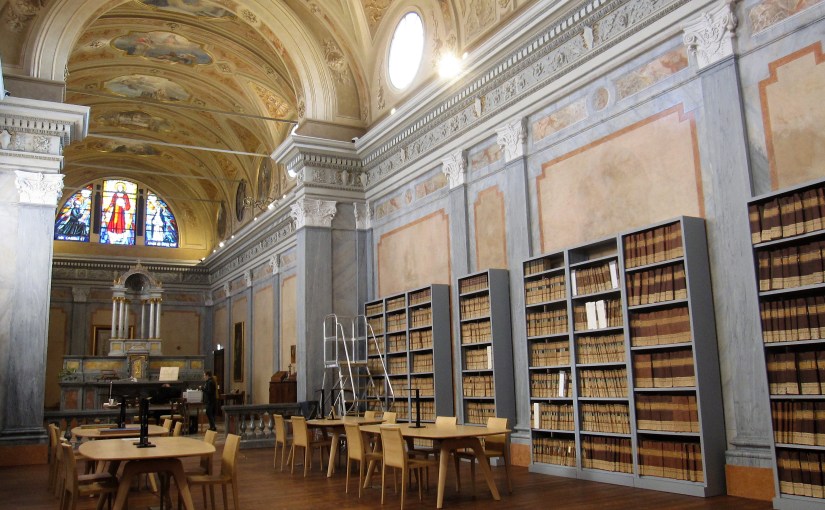
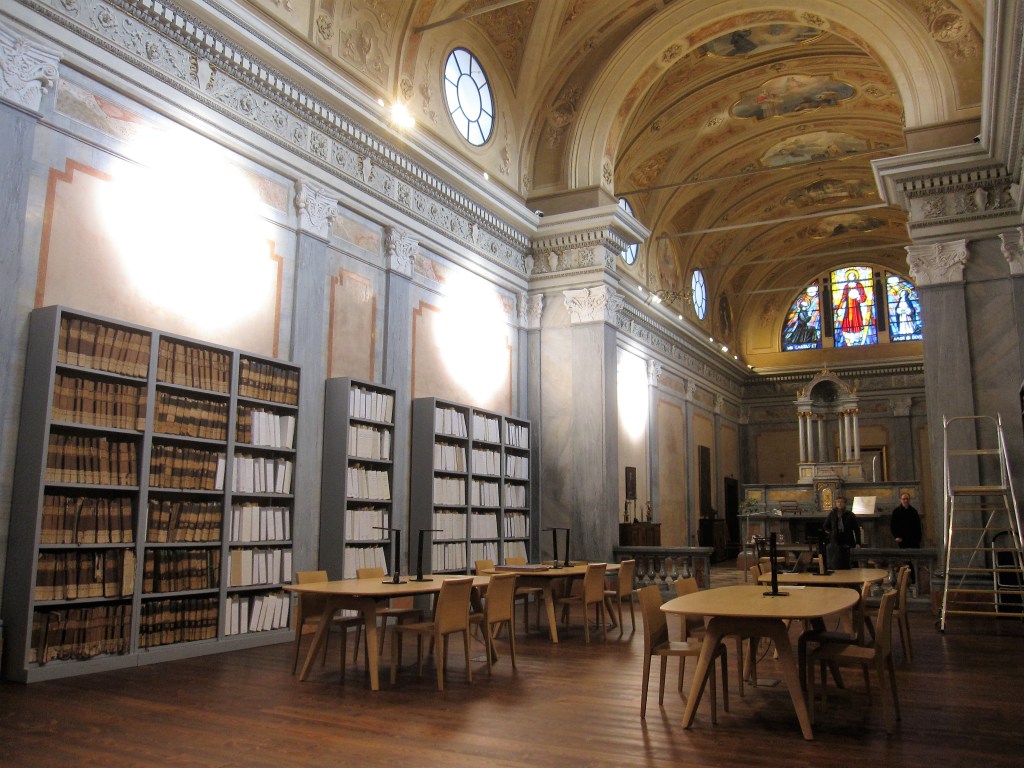
Genealogical research in Italy = all the above, in an ancient baroque chapel!!!
This is the brand new Vigevano Diocese Archive, so far the most beautiful I ever visited.
Besides being pleasant for your soul and mood, working in this archive is also perfect in terms of efficiency: parish registers are at hand, there is no limit to the number of books which is possible to collect and – last but not least at all! – the staff is extremely nice and helpful! Thank you to everybody!
I will soon post a selection of the worst archives where I worked, so that you do not start thinking it’s always like this.
I was inspired for this series of posts by the many requests for help that are posted on Facebook groups, where assistance in understanding handwritten records is asked.
Handwriting can be an issue, and not only for foreigners. Sometimes, even Italians struggle with unintelligible words and sentences.
Well, believe it or not, in some cases it is possible to by-pass the handwriting problem.
We could call it…
INVESTIGATE INSTEAD OF INVENT
Here is my second post and it is dedicated to FIRST NAMES
(the previous one was dedicated to PLACE NAMES, here is the link, if you missed it:
I am not going to teach you how to read a particular calligraphy. I am going to give you some hints which may be helpful to interpretate the correct name.
INFO AND TIPS ABOUT FIRST NAMES
Italian names follow the grammar rules for the Italian language.
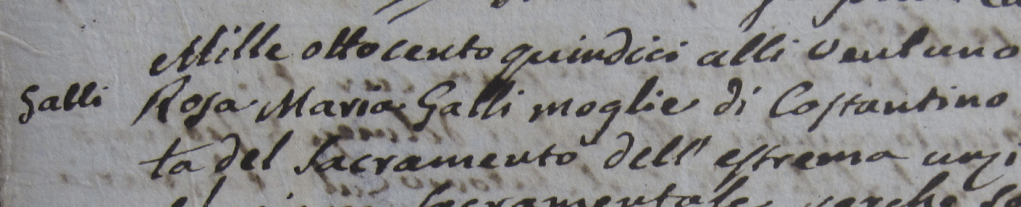
For example, the letter T is never preceded by M: it should be preceded by N.
The following transcription, for example, is wrong: the right name can only be Costantino.
Also, the letter Q is always followed by U. The below name cannot exist is Italy, and its correct spelling is Pasqua.
Some random rules, then: the letters C, D, F, G, L, R, S, T, V, Z are not preceded by M, they must be preceded by N.
The name Amleto is an exception because it is imported from a foreign language.
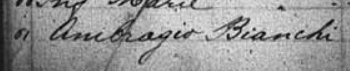
The letters P and B are not preceded by N, they must be preceded by M (Ambrogio) except in the first names which are composed by Gian + another name: Gian+Piero = Gianpiero; Gian+Paolo = Gianpaolo.
2. The great majority of Italian given names are always the same. Inventing new names was very rare among our ancestors. So, do not crash your head for something new, as it is probably a very common name. In the following example: Feresa does not exist, the name is surely Teresa.
The same for this hard-to-believe Anibragio, which can only be Ambrogio
3. Check a list of Italian first names, for example
or other similar websites. I am sure you will find the mysterious one of your ancestor!
4. It was very common to honor relatives or godparents giving a newborn their same name, so a first name is often repeated in the family: check other relatives to figure out if the mystery name appears in other occurrences.
5. In some areas of Italy, though, the tendence to give a newborn a brand new, unique name was very common. In Toscana and Emilia Romagna, for example. In these regions you may actually stumble upon very strange first names. In the following case, the son was baptized as D’Artagnan (parents were eventually fans of the Three Musketeers!)
6. If the name looks – or actually is – very peculiar, check the protector saint of the town, or the saint to whom the parish is dedicated: it can be a clue.
In the following example, the name is Genesio: very peculiar, but absolutely common in the town of origin of this person. Saint Genesio (whoever he was) is the town protector.
7. Two names were often joined together to form a composed name:
Maria+Anna = Marianna
Giovanni+Luca = Gianluca
Michele+Angelo = Michelangelo
8. In handwritten records, names were often abbreviated:
M. or M.a for Maria
G.ppe for Giuseppe
Gio.Batta for Giovanni Battista
D.co for Domenico
Ant.o for Antonio
Vinc.o for Vincenzo
Cat.a for Caterina
9. Sometimes, calligraphy required the first, capital letter of a name to be written in a more sumptuous way, which is today hard to understand. If you can’t get a clue about the name, disregard the first letter and try to identify the name basing on the other letters.
10. In Italian, Don is no name: it is a title of respect for a noteworthy person in town, or for a priest. The same for Donna: it is the feminine version of the title Don.
11. Of course, if you can, check multiple records containing the same name, including signatures
Remember: the correct spelling is always Giuseppe!
The spelling Guiseppe is wrong!
The same for Giulio (correct spelling) who is not Guilio.
I was inspired for this series of posts by the many requests for help that are posted on Facebook groups, where assistance in understanding handwritten records is asked.
Handwriting can be an issue, and not only for foreigners. Sometimes, even Italians struggle with unintelligible words and sentences.
Well, believe it or not, in some cases it is possible to by-pass the handwriting problem.
We could call it…
INVESTIGATE INSTEAD OF INVENT
Here is the first post dedicated to PLACE NAMES
In the above record, the writer was probably confident to be smart and to create something artistic in his bureaucratic job, thanks to this fancy calligraphy.
Just the opposite, 150 years later these words are hardly readable (and the blurry scan doesn’t help).
Now, I am not going to teach you how to read this particular calligraphy. I am going to explain you the
TIPS TO UNDERSTAND
the most important info about places.
START
If you can’t understand a place mentioned in the record, start from what you know, i.e. the town of the record (if you have the record, you should know which is the municipality or church that issued it).
At first, try to isolate some letters composing the “mystery place”.
In the above record issued by the municipality of Castel San Giovanni (province of Piacenza, region Emilia Romagna) other two towns are mentioned.
The first “mystery place” starts with Borgo, but there are hundreds places starting with BORGO, in Italy. Which is the right one?
Second example from the same record: this place name is a long name, ending with “GO” and having a “O” as a second letter. Can you understand more? That’s even better!
FIRST TIP
Use WIKIPEDIA
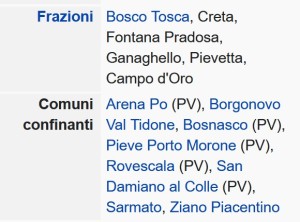
Go to the Italian page of the known town – Castel San Giovanni, in this case – and check its hamlets under the section FRAZIONI (right column) as well as the neighboring towns in the section COMUNI CONFINANTI.
Very often, the mystery place falls into one of these two options.
Ok, the place from the first example is surely BORGONOVO, a neighboring town. Can you read it now?
Checking the hamlets of all neighboring towns is also very useful, if this first attempt fails.
The place from the second example does not look like anyone in this list, though. We must go further.
This site provides info about all Italian towns and cities, both existing and no longer existing.
Digit some letters of the “mystery place”, the ones you understand, and you will get many records sorted out by region and province. Usually, the “mystery place” is close to the known place.
For example, by digiting simply “GO” and filtering by region Emilia Romagna and province Piacenza, you will get the following results
GOSSOLENGO is the town that matches with the place mentioned in the record. A quick check with Google Maps will help you discovering that it is very close to Castel San Giovanni.
You can use this site to search any town name in Italy, even if you don’t know where to start from.
For example, if you have a non-Italian record mentioning the town, without any clue about where it is situated, try with Elesh and you may find the correct town name.
THIRD TIP
If you can’t find a place which has been transcribed, try reading it on the original, handwritten record: it is better to search a place knowing only a few correct syllables than a full name which is wrong.
FOURTH TIP
Use GOOGLE MAPS
Perhaps the place mentioned in a record was a very small area within a town.
Especially in rural areas, Italian towns were often made by several scattered hamlets or areas that were called Località XXX, or Contrada XXX, or Regione XXX.
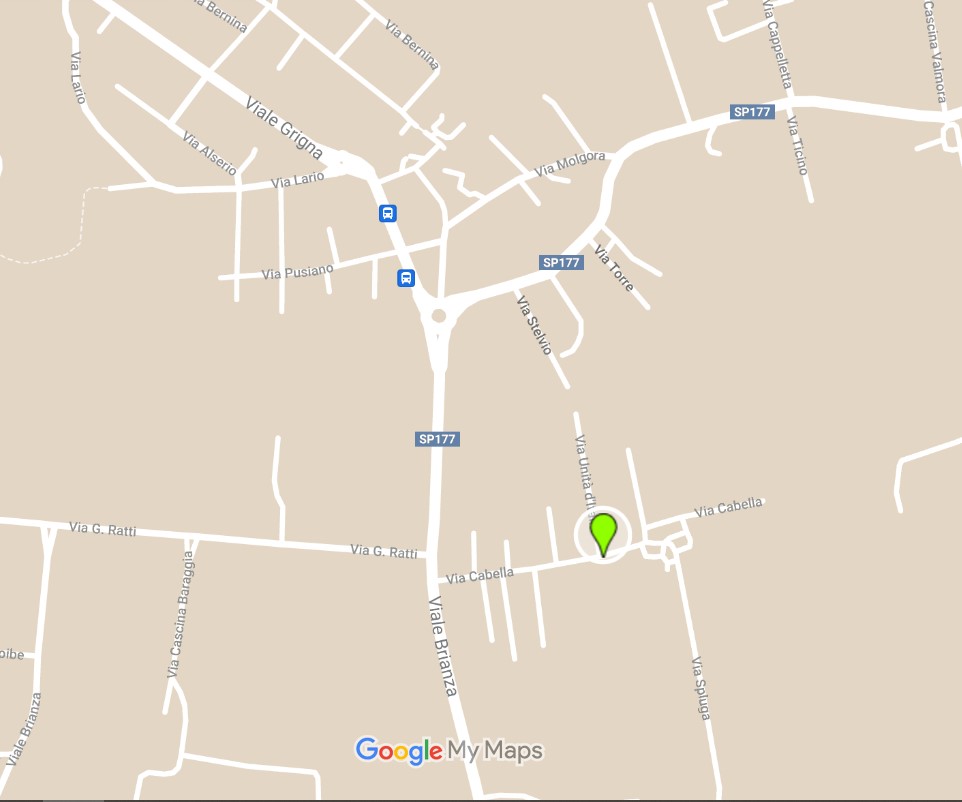
Search the known town followed by Via (street) and the mysterious toponym: usually, the old area was re-named as a street and it is now called Via XXX.
In the following map, the ancient Località Cabella is today Via Cabella.
REMEMBER!
In Italy, very often people were not travelling far. They usually moved to nearby towns in search of better working conditions, so your mystery town is probably situated close to the area you already know.
If a person mentioned in a record was coming from very far, its place of origin was often described with more precision.
So, do not wear your eyes out by trying to read difficult handwritings, and do not invent town names basing of what you think to interpretate, but investigate among existing towns and toponyms.
I hope you found this post useful.
I will be back soon with the second post of this series:
Sono i viaggi che ogni vescovo organizzava periodicamente per visitare tutte le parrocchie della diocesi al fine di controllare lo stato dei beni ecclesiastici (luoghi di culto, opere d’arte, reliquie), per accertarsi che la situazione contabile fosse ben gestita ecc.
Quando si effettuavano le visite pastorali?
La frequenza è variabile, solitamente l’intervallo tra una visita e la successiva è di qualche anno.
L’obbligo per il vescovo di visitare le parrocchie a lui sottoposte è stato sancito con il Concilio di Trento, quindi i primi documenti risalgono alla fine del 1500 circa.
Che cosa sono i documenti delle visite pastorali?
Tra i documenti si trovano i rapporti stilati dai cancellieri, che riportano i dettagli della visita (l’itinerario, le parrocchie visitate, i beni e le reliquie che il vescovo ha controllato ecc.), le schede biografiche di tutti i preti e gli altri ecclesiastici, nonchè i rapporti che i parroci erano obbligati a redigere con l’indicazione dei beni, dei debiti e crediti, e delle eventuali problematiche concernenti la parrocchia.
Dove sono conservati questi documenti?
Presso gli archivi storici delle diocesi e arcidiocesi
QUALI INFORMAZIONI UTILI ALLA RICERCA GENEALOGICA SI POSSONO TROVARE IN QUESTI DOCUMENTI?
Le finalità per cui questi rapporti venivano stilati non avevano nulla a che fare con la genealogia o con le famiglie in generale, pur tuttavia vi si trovano elenchi di persone e questo potrebbe permettere, con un po’ di fortuna, di trovare informazioni preziose su un antenato.
In pratica, i documenti delle visite pastorali potrebbero essere una fonte alternativa dove cercare informazioni quando si è di fronte ad un ostacolo, oppure quando si desidera approfondire la conoscenza del proprio antenato.
Le informazioni più consistenti sono ovviamente quelle relative ai religiosi, che possono rivelarsi utili nel caso in cui il religioso facesse parte della famiglia che stiamo cercando.
Inoltre, la ricerca in questi documenti può essere un valido aiuto per capire qual era la parrocchia di riferimento, che in caso di paesi molto piccoli poteva anche non trovarsi in loco: nei documenti si potrebbe quindi scoprire che l’oratorio del paese A si appoggiava alla parrocchia del paese B, e risalire quindi al luogo dove sono conservati i registri parrocchiali relativi agli abitanti di A.
Qui di seguito ecco alcuni esempi.
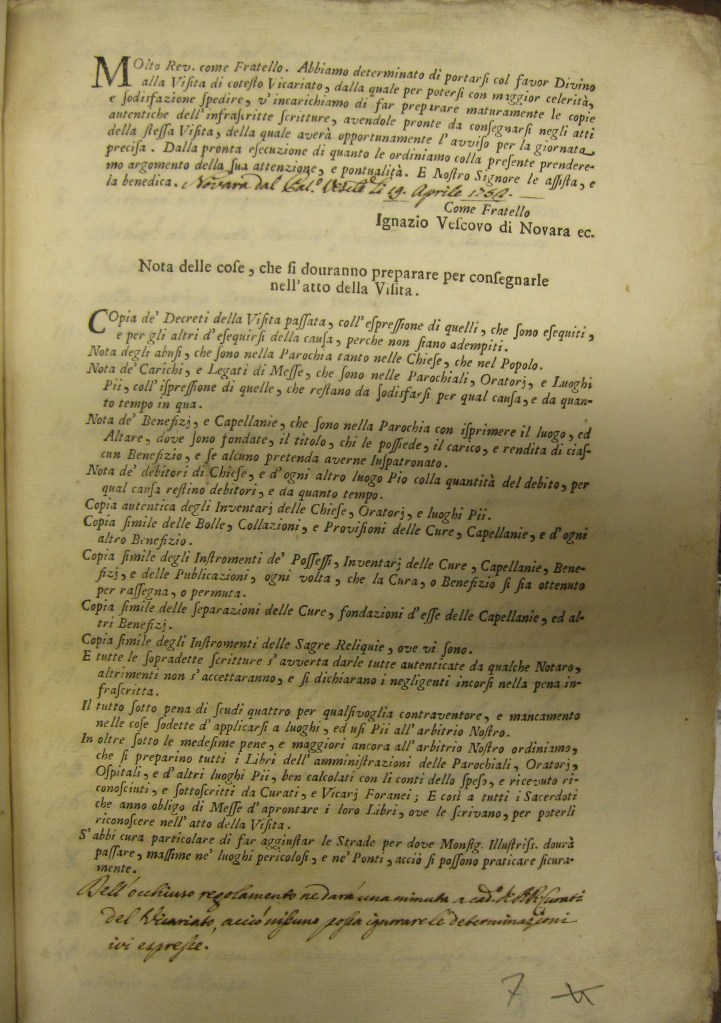
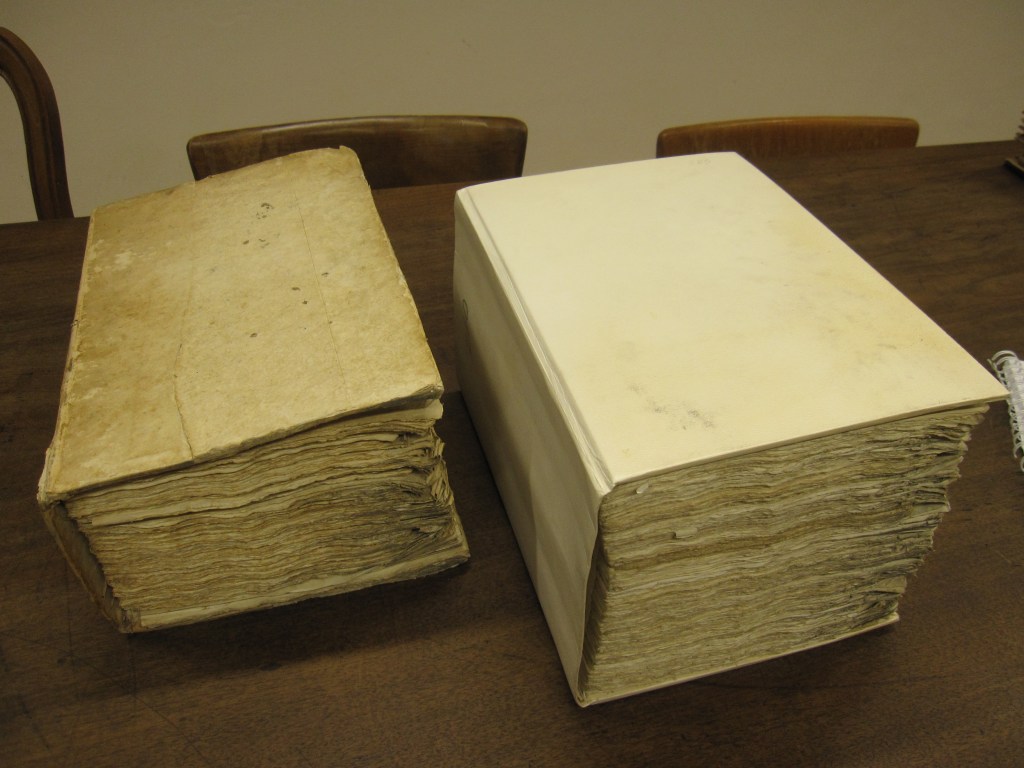
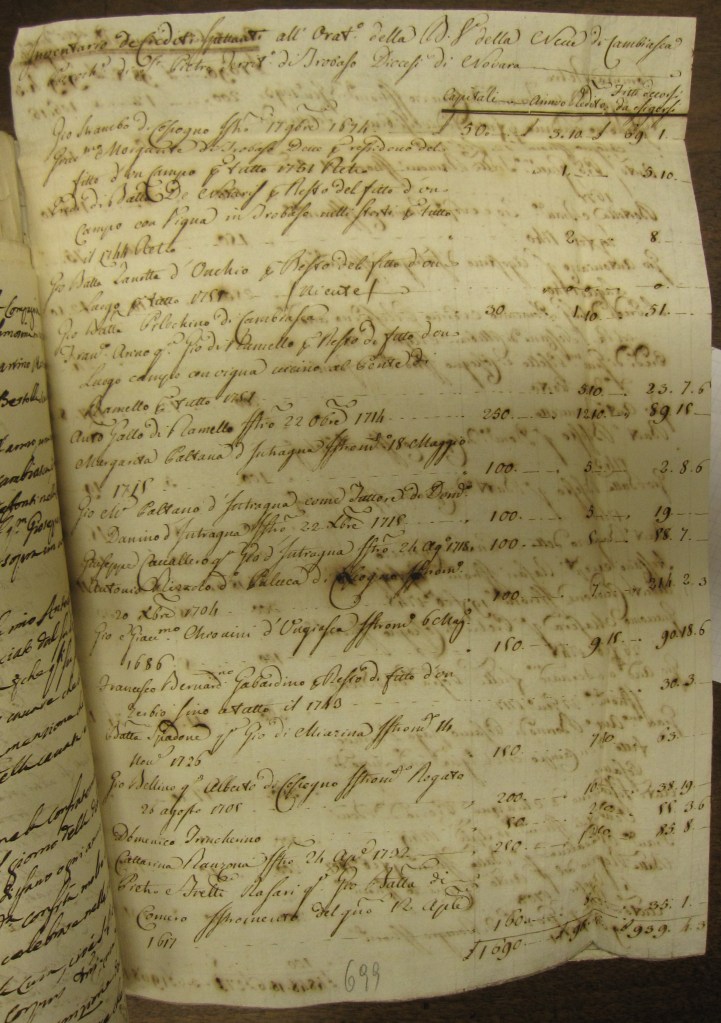
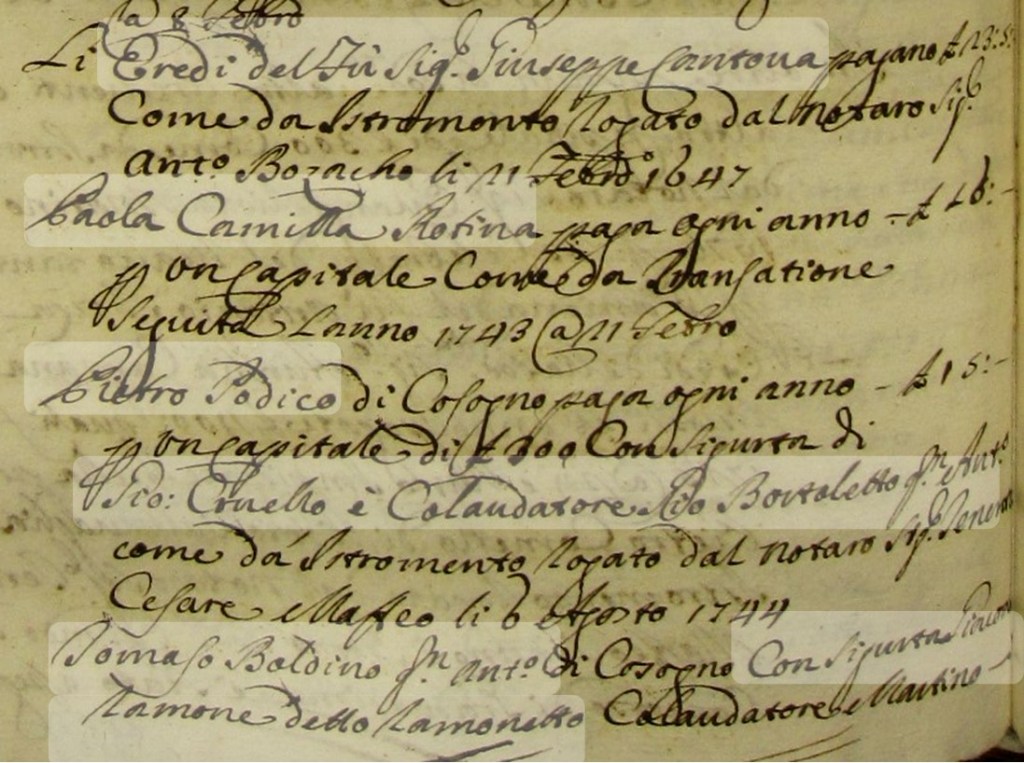
Introduzione agli atti della visita pastorale del Vescovo di Novara, Ignazio Rotario Sanseverino, in data 5 maggio 1752 con l’indicazione dei comuni visitatiElenco dei documenti richiesti dal Vescovo, che i parroci della diocesi erano tenuti a presentare durante la visita del 1752Esempio di tomi delle visite pastorali (non voglio scoraggiare nessuno, ma è meglio essere preparati…)Elenco delle religiose presso il Monastero di S. Antonio Abate in Intra (anno 1752)Prima pagina della scheda personale del parroco don Angelo Francesco Scaramuzzi, città di IntraInventario dei crediti spettanti all’oratorio di Cambiasca (derivanti da affitti) con i nomi degli affittuariEsempio di importanti informazioni familiari che si possono rinvenire in questi documenti: menzione di un legato da distribuirsi ai poveri, lasciato dal fu Pietro Baratto nel suo testamento rogato dal notaio Colla con atto del 22 dicembre 1751. Sarebbe sufficiente in questo caso accedere al testamento per scoprire l’intera parentela del Baratto.Altro esempio: persone che si impegnano ad una donazione alla parrocchia
Con la speranza che possa essere di aiuto nella Vostra ricerca, auguro buon lavoro e buona fortuna!
Elena
P.S. Se volete, qui sotto potete scaricare la versione in PDF di questo articolo.
A new, amazing experience was offered to me by Bob Sorrentino and his blog www.italiangenealogy.blog/ as I was proposed to record a podcast together with my friend Traci Stevens Callister from Utah.
Use the link below to listen to the amazing story of Traci’s research of her ancestor – the mysterious Lady in Black – how this brought her to an adventurous journey to Italy and to unveil her genealogy as far back as 1600!
You will also discover how this unknown Lady born in the 19th century tangled with my destiny and changed my life forever!
Thank you to Bob for hosting us and giving us a voice to tell our story!
If you have an interesting story about genealogy to tell the world, get in touch with him!






















 E. G. ANCESTRY RESEARCH