Is your ancestor’s surname a place name?

Here is what you may want to know about it

Many Italian surnames coincide with a place name – a nation, a region, city, town, village or hamlet – and the reasons may be different, sometimes even surprising.

In this post I will try to answer your questions about it, for example:

  • If my ancestor’s surname is also a place name, does this mean that he was coming from that place?
  • Was the place named after my family, or the opposite?

Disclaimer: this is not the result of a specific study, it’s only the consequence of my experience “on the field” and so, my approach will be very practical.

If you are from America, Canada or Australia, you are very used to surnames which are also place names, as there are many examples in your Countries, such as Washington, Vancouver and Sydney.

In these three cases, and in most cases in your Countries, a new city was named after a famous person, as a tribute.

This is situation is very rare in Italy and the reason is simple: most cities and towns, villages and rivers, mountains and gulfs were named long before people started to have surnames!

THE ORIGIN OF SURNAMES

Let’s make it quick and simple: surnames started to be used in the late Middle Age, but they were officialized only at the end of the century 1500, adopting as surname the nickname a person was known with, which could be his job, the name of his father, a physical characteristic, his place of origin or something else (there may be many examples).

Here are the categories that I identified, referring to surnames which are also place names.

PEOPLE NAMED AFTER THEIR PLACE OF ORIGIN

The majority of people whose surname is also a place name, may be native of that place.

However, this means that they were living in that place before the introduction of surnames, many centuries ago!

For example, if in the Middle Age a family was moving from Monza to another place (let’s say Milan), they were identified as “those from Monza”, and when surnames were formally introduced, it is possible that they adopted the surname Monza, because this is how they were known in Milan.

This means that you will never find traces of your Monza family in Monza, because they were called Monza only after leaving this city and settling in another one.

Besides this, the adoption of the surname Monza may have happened before the introduction of parish records, and it may be very difficult or even impossible to get to the origins of it.

The above example is a good one, actually.

There are, in Italy, 495 families with surname Monza

Guess how many are living in Monza? No one!
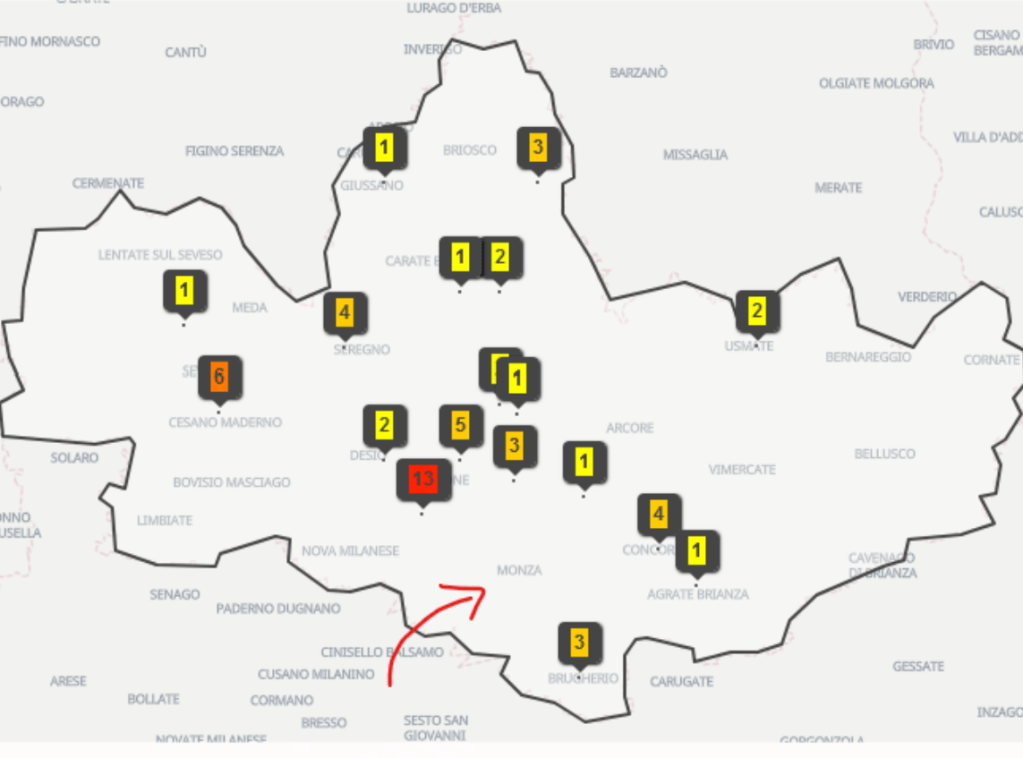
Of course, because Monza was the surname which was given to people whose distinguishing characteristic was that they were coming from Monza, but there was no reason for a person living in Monza to get the nickname or surname Monza, as it was not a distinguishing mark.

(Source: https://www.cognomix.it/mappe-dei-cognomi-italiani/MONZA, accessed January 25th, 2025)

This is true also for surnames which are adjectives instead of nouns, such as Lombardi, Siciliano, Napolitano, Spagnoli (from Lombardy, Sicily, Naples or Spain respectively).

If your ancestor’s surname is GALLO or GALLI, you are in the same group, too!
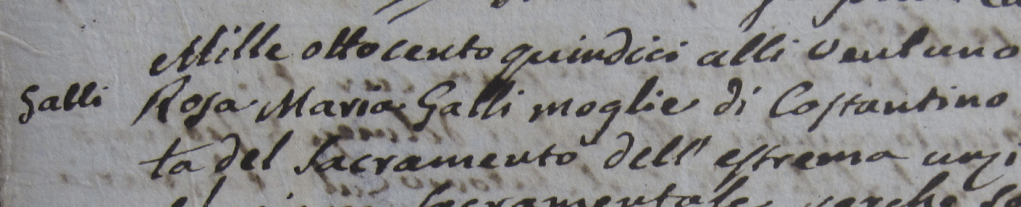
Gallo has two translations: one is rooster, which is not the meaning of the surname, the other one is Gaul, thus French: your ancestors were then French people who settled in Italy some time in the distant past.

PLACES NAMED AFTER THE PEOPLE WHO WERE LIVING THERE

So, if your surname is Roma, I am sorry if you are disappointed to discover that the city was not called after you family!

On the other hand, if your ancestors were coming from a small hamlet, the place may actually have been called after them!

Imagine a small rural Italian town, a few centuries ago. Outside the town center, scattered in the countryside, are a handful of poor farmhouses, inhabited by families of farmers.

How do you call those places? Of course, like the people who are living there!

How can you recognize if the place took its name from the family, or if it’s the family who was named after the place because it was their place of origin?

Here is a very practical way (not 100% sure, but almost): check if there are still families living in that place, with that surname!

Here is an example: Cimelli is a surname and also the name of the hamlet of a town in Emilia Romagna. There were – and still are – families with the surname Cimelli living in Cimelli, so their surname cannot be a distinguishing mark, it did not suggest that they were “coming from Cimelli”.
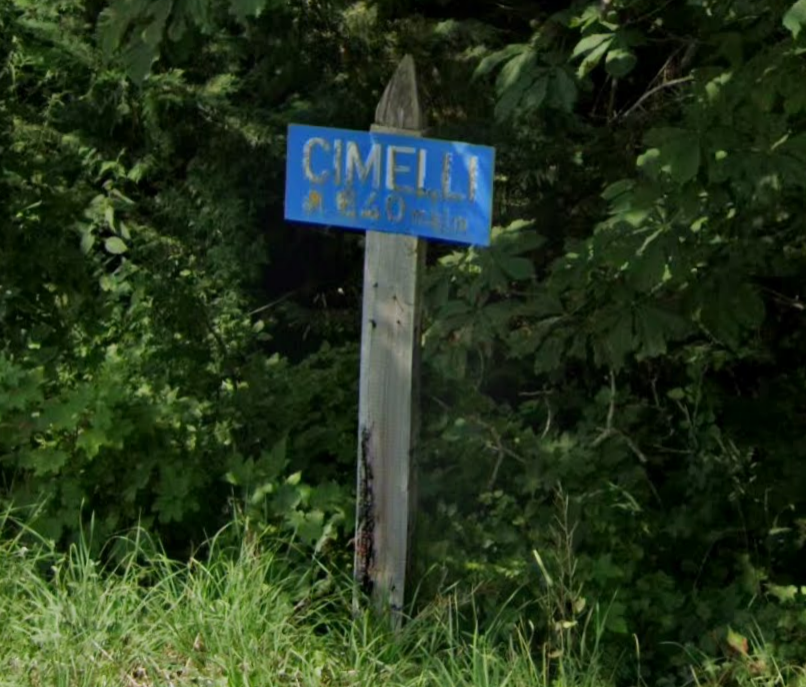
For this reason, it is very likely that the place was named after the people who were living there.

Another example is even clearer: it’s another minuscule hamlet of a tiny town in Piedmont, and its name is Delaurenti, which means “(son) of Lorenzo”.

It is obviously a surname, a patronymic, not a place name. It was called after the family who was living there, whose surname was Delaurenti.

PLACES NAMED AS A TRIBUTE

So, a person named after a place, to indicate the origin, or a place named after a person to indicate the residence… No tributes like for Washington?

Most places in Italy had already their names when people did not have surnames yet, so how could they be re-named to honor a famous person?

In a few cases they did, adding their important citizen’s surname to the town’s name. Here are a few examples:

  • Castelnuovo Nigra, in Piedmont, renamed adding the surname of its famous citizen Costantino Nigra (poet and politician)
  • Andorno Micca, in Piedmont, renamed to honor Pietro Micca, a war hero who died in 1706
  • Camnago Volta, a hamlet of Como where the famous chemist and physicist Alessandro Volta had lived

In these cases, if your family surname matches with that of the tributed person, your ancestors may actually be native of that town, and possibly also related with the famous person!

PEOPLE NAMED AFTER A RANDOM PLACE

What about Rosa Teodosionopoli from Pellegrino Parmense?

Teodosionopoli (Teodosiopoli, actually) is the ancient name of a city in Anatolia, Turkey, whose modern name is Erzurum.
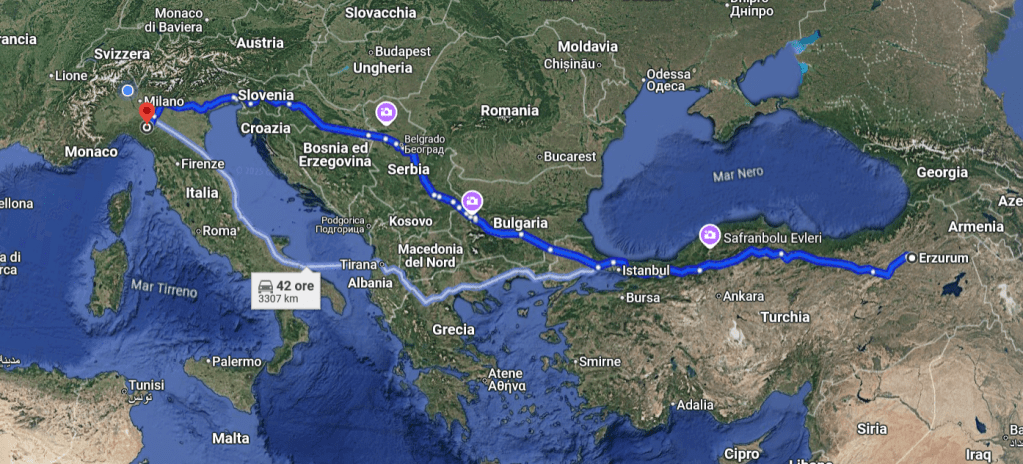
Which amazing family history is hidden behind the surname of this person?

Were her ancestors actually born in the exotic city of Teodosiopoli?

Of course not. No historical circumstance would ever explain why a migrant from Teodosiopoli ended up in Pellegrino Parmense, in Emilia Romagna, but even if it would, the migrant would have been probably nicknamed Turco: Turkish.

No wonderful family history for Rosa, unfortunately: she was a foundling, and this is the explanation of her surname.

When foundlings were abandoned at a hospital, they were given a random name and surname. In many cases, the inspiration for the surname was coming from a dictionary or encyclopedia, and toponyms were often used.

How to spot if a surname indicates the real origin of the family or if it’s an invented surname?

One way could be to analyze how far are the two places: the birth place and the place name used as surname.

If the origin of the family was from a very small village in Calabria who migrated to a distant region, the nickname would have probably been Calabrese, which was enough to identify the family.

If the surname points at a small town which is very far from the birthplace, it is probably not related to the place of origin.

If the surname is an exotic place name such as Acapulco, it is surely the surname of a foundling.

If the surname is not very spread out in the area, and it looks like your family is the only one family with that surname, it is probably so, and your ancestor was a foundling.

I hope you found this post useful to the discovery of your family history!

Feel free to send comments or questions!

Passports in the 19th century

(All I discovered about them)

This post will hopefully reply to some of your questions about Italian passports, and if it won’t I hope it will be an interesting read, at least.

In the next chapters I will share with you everything I discovered about these important documents during my research at the Genova State Archive: I will tell you how they looked like, how they were obtained, which info were reported and also if a passport research is possible.

Let’s start discovering them!

A NECESSARY PREAMBLE

The Italian Nation was born on the 17th of March 1861, which is the date when the new Kingdom of Italy was proclamed, following the unification of the country as a consequence of our Independence Wars.

Before that date, the Italian peninsula was politically split in many different States.

https://commons.wikimedia.org/wiki/File:Italy_unification_1815_1870.jpg

The map above shows the different States just before their unification into the Kingdom of Italy.

Just to make it simple, here is an approximate conversion table.

Present region/provinceAncient State
Piedmont, Valle d’Aosta, Liguria, Sardinia, part of south/west Lombardy, part of southern France along the coast, French region SavoyKingdom of Sardinia
Lombardy, Veneto, Trentino Alto Adige, Friuli Venezia GiuliaLombardian-Venetian Kingdom governed by the Austro-Hungarian Empire
Provinces of Parma and Piacenza (present Emilia Romagna)Duchy of Parma
Province of Modena (present Emilia Romagna)Duchy of Modena
Province of Bologna, region Romagna, Marche, Umbria, LazioPapal States
Province of Lucca (present Tuscany)Duchy of Lucca
Rest of TuscanyGranduchy of Tuscany
All the remaining territory in Central and South ItalyKingdom of the Two Sicilies

Veneto and Friuli merged with the Italian Kingdom later (1866-1870), and there were mini-states that I did not mention, but it is not the scope of this article to get into these details. If you wish, you can check this Wikipedia page: https://en.wikipedia.org/wiki/List_of_historical_states_of_Italy

What I wanted to highlight is that if your ancestor emigrated before 1861, he did not have an Italian passport!

His passport was emitted by one of the States listed above.

The other important detail to remark is that before 1861, people needed a passport to travel to the other States. Persons travelling from Milan to Genova needed a passport, as well as from Tuscany to Rome, or from Bologna to Naples.

HOW A PASSPORT LOOKED LIKE

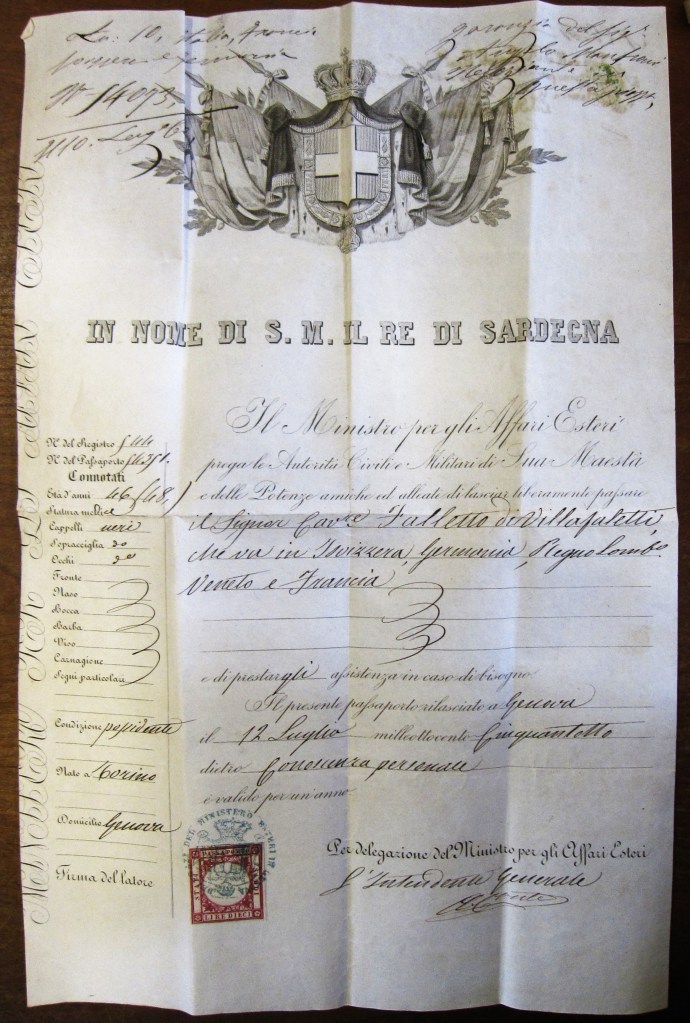
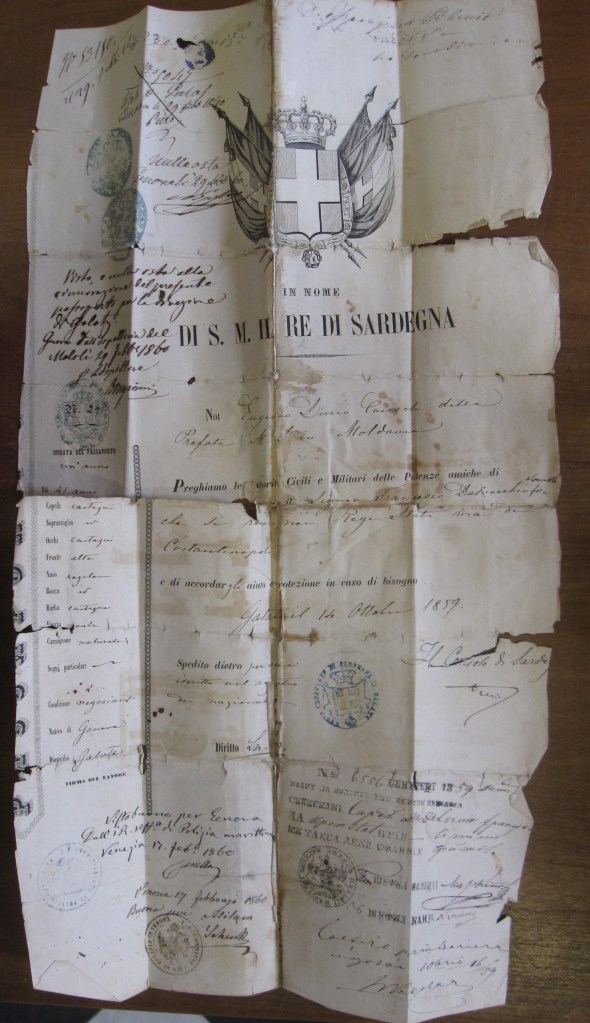
Forget the modern booklets with a hard cover and multiple pages, here is how a 19th century passport looked like

It was a single big sheet (bigger than a Letter format) and it was supposed to be folded the size of a pocket.

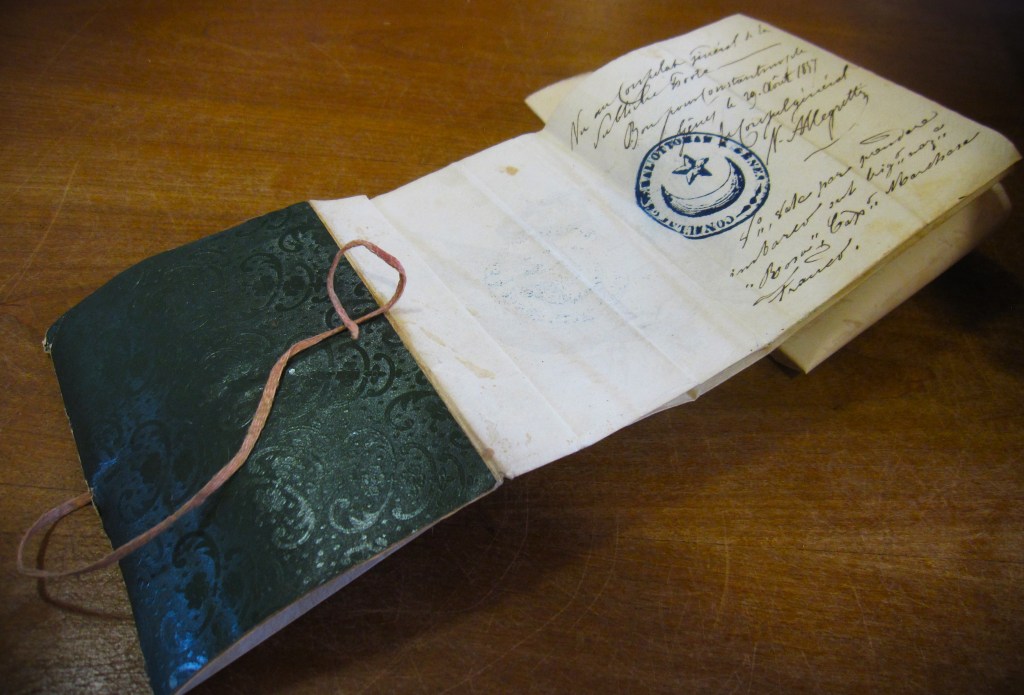
I also found an example that still carried part of a cover and the ribbon that was closing it

WHICH INFO IT REPORTED

The passport carried, on its top third, a grandiloquent crest and introduction.

In this example, the writing in big letters declares “in the name of His Majesty the King of Sardinia”: it was 1858 and Italy was not yet unified.

The central part reported the name of the passport holder and the destination.

In the example above: Sir Falletto from Villafalletti, who was going to travel to Switzerland, Germany, Lombardian-Venetian Kingdom and France.

Here below another example where the passport was extended to the entire family: “Carlo Gerardo son of the late Marcello with his wife Marina aged 28 and their children Lorenzo aged 8”.

They were travelling to Austria, Italian States, France, Switzerland and England.

The bottom part reported the place and date of the passport emission and the documents that were provided to obtain a passport.

More about the required documents in the next chapter.

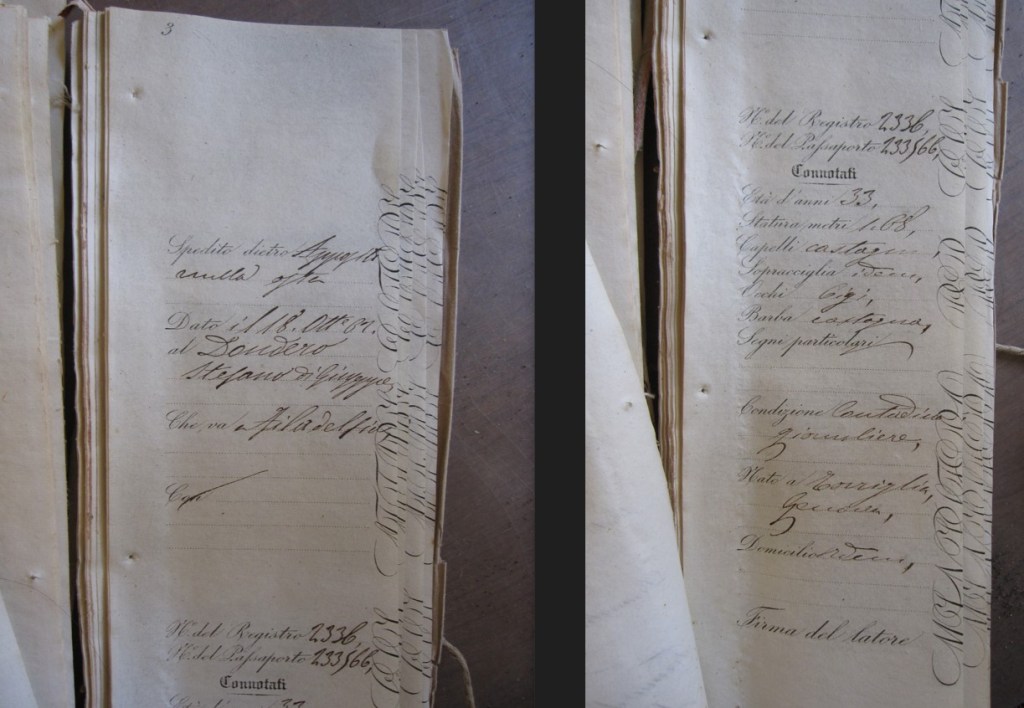
The left part is dedicated to the “photo” of the title holder. Of course, photos were not in use in 1858 and so, this margin is for the physical description.

The details which are reported are: age, height, hair color, eyebrows, eyes, forehead, nose, mouth, beard, face shape, skin tan, distinguishing marks.

The word “Condizione” meant profession: in this example, the title holder was a merchant, which makes the request for a passport plausible.

At last: birth place and domicile.

HOW A PASSPORT WAS OBTAINED

The passport was issued by the Questura, the central police station, on behalf of the Ministry of Foreign Affairs.

Usually, it was necessary to show a “Nulla Osta” (no impediment), which was issued by the local Assessor to the Public Safety (Assessore di Pubblica Sicurezza). In this document, the Assessor declared that he was not aware of any obstacle that would prevent the applicant to obtain a passport.

For men, a note was added about their military status, whether they had served in the army. This was, of course, to avoid draft evaders to flee abroad.

In Genova, I had the chance to browse throught a few hundreds documents to request passports and I realized that, despite being the Nulla Osta the standard certificate needed for this request, in many cases alternative documents were provided: for clergy people, a reference letter from their superior was the rule; in one case, a woman obtained a passport by showing a heartfelt invitation letter from her husband to join him in America; foreign people who had been living in Genova for a while obtained a passport by giving back their expired, foreign passport (or at least, this is how I understood it).

In the first example, Sir Falletto from Villafalletti was eventually a privileged: he did not provide any document or Nulla Osta and he obtained the wished passport because he was “personally known”.

HOW IT WORKED

The logic behind 19th century passports was different from today’s. In a way, they were more similar to a visa because they listed the places where the holder had in plan to travel, and also because they had a very short validity: 1 year.

Theoretically, the owner of a passport had to give it back to the Questura at his return from the travel mentioned in the passport.

Of course, this was not always done, especially if the passport was used to emigrate steadily and never come back.

IS PASSPORT RESEARCH AN OPTION?

The answer is in the few lines above: people who emigrated and did not come back to Italy, did not return their passport to the Italian Questura.

And also, as I said above: the passport was a single sheet of paper.

No copies, no duplicates.

If your ancestors emigrated overseas, the most probable place where the only one example of their passports can be is a drawer in an old relative’s house… if it’s still existing!

There are no copies in Italy, unfortunately.

So, what did I search, in Genova, exactly?

The Genova State Archive stores a collection called “Matrici dei Passaporti 1858-1873”: passport stubs from the year 1858 to 1873.

The time lapse is very limited, only 15 years, but every year contains the traces of approximately 1200-1500 passports! So it’s a big number anyway.

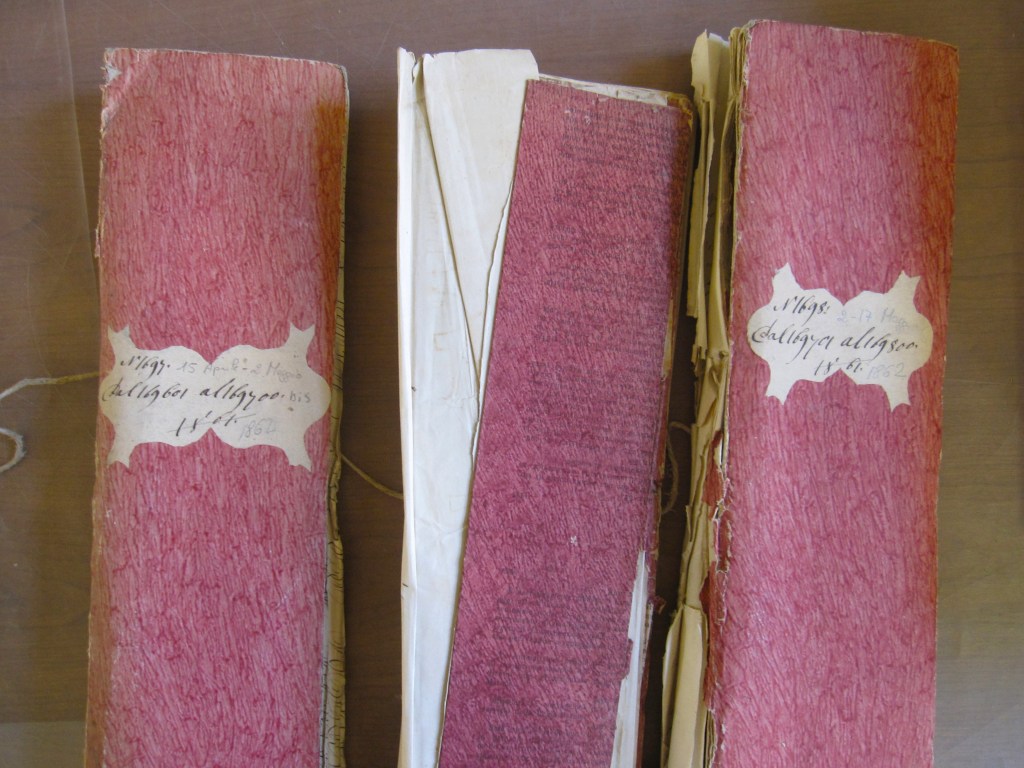
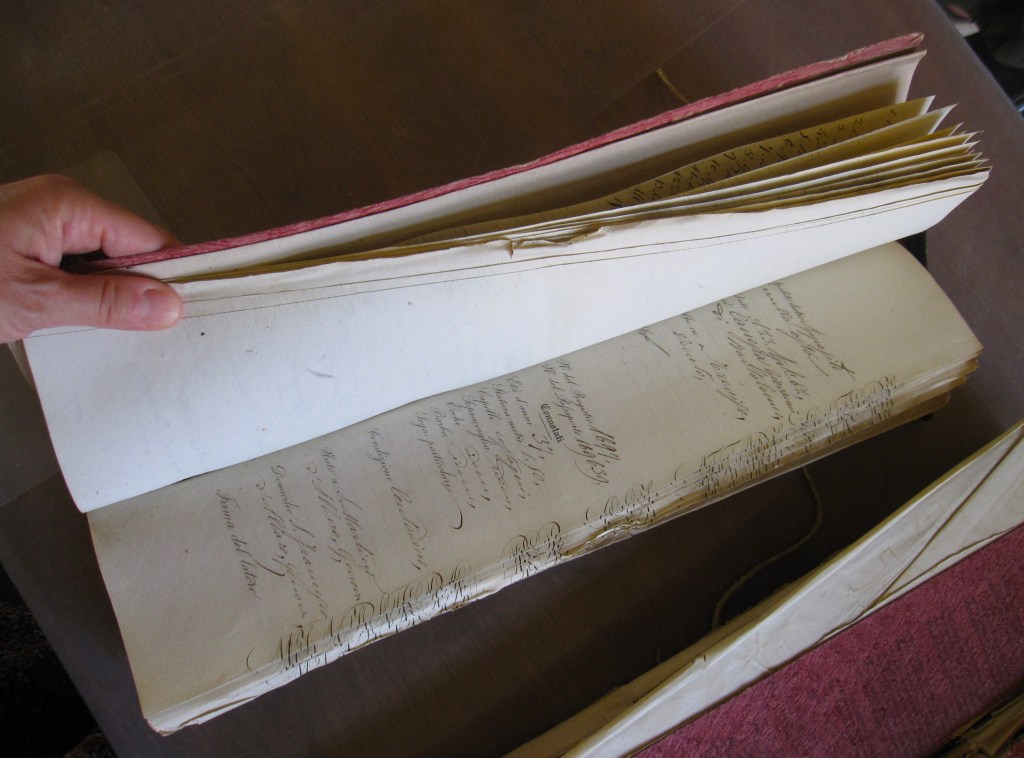
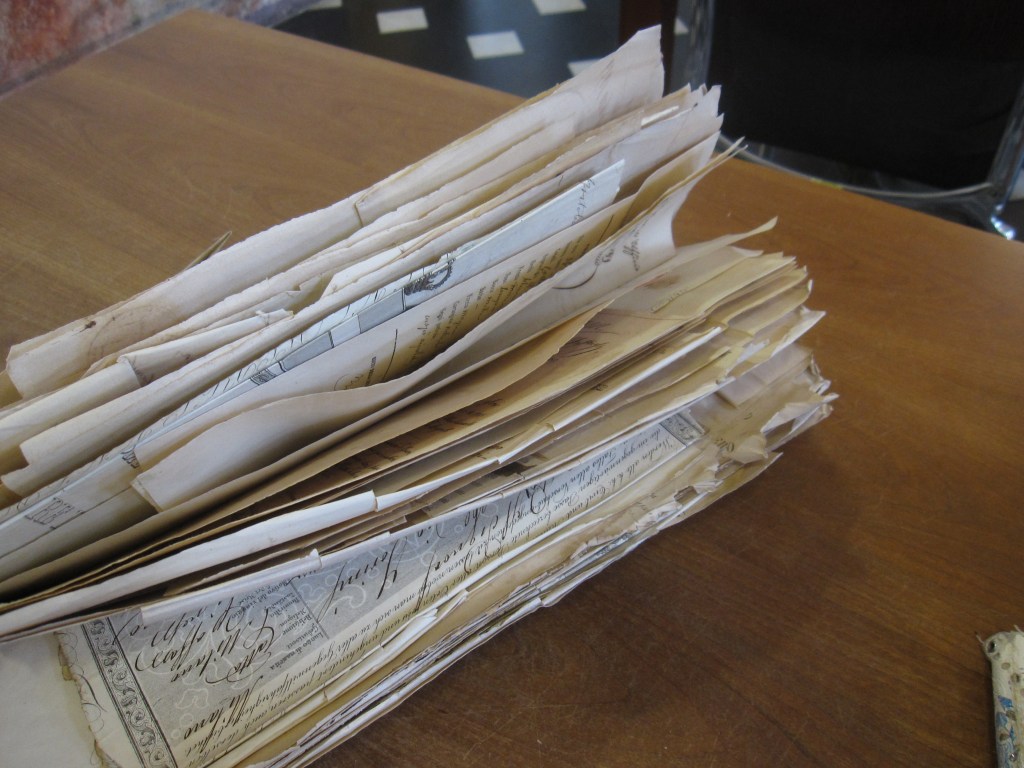
As just seen, the passport was a single big sheet. These sheets were bound in a register which contained 100 passports each.

For each sheet, the stripe that was along the binding of the register was the stub of the correspondent passport, which had to be compiled with the same data.

So, although it is very unlikely to find the real passport, it may be possible to find the stub reporting all the info, including the birth town, which is sometimes a brick wall to tear down.

The oldest registers were organized in a different way: instead of compiling the stub, the Questura Officer was attaching the documents supplied to obtain the passport, hence the Nulla Osta or the reference letter, or even an old passport.

Browsing through this miscellaneous collection always opens up to surprises: if you find the document about your ancestor, you may discover where he was travelling to, when, and for which reason. You may discover other family members he was traveling with, or sometimes info about his military service such as the place where he served the army and which gave the authorization for the passport.

From a researcher’s point of view, it is hard job but very interesting.

So, if finding your ancestor’s passport may be just as probable as being hit by a meteorite while jogging in the park, the chances of stumbling upon a Nulla Osta, a passport stub or another document are much higher.

Here are some amazing examples.

Together with the Nulla Osta, this man had to prove that he had accomplished to this military duties and he provided therefore a certificate stating that he was exempted by his military service for being the only son of a man older that 50: additional info that you would never expect to find in a passport collection!

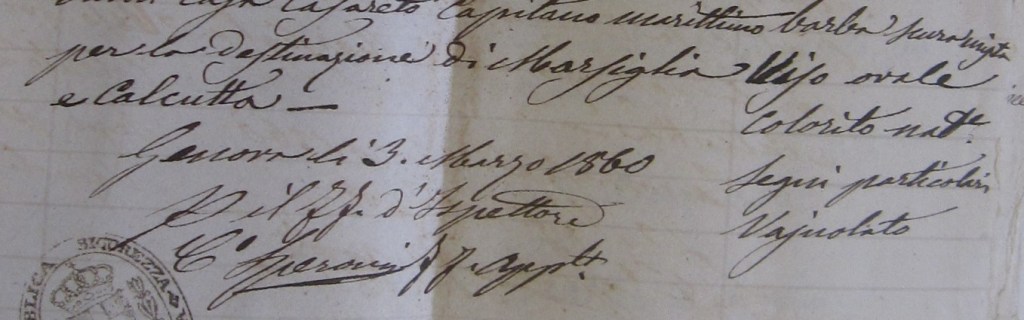
This is a crop of a nulla osta that I found by chance: he was the ancestor of another customer of mine, not the one who hired me to search for passports. I stumbled upon him and I was very surprised to discover that he was going to Marseille and Calcutta, because we only knew that he was a sea captain going back and forth Italy and South America.

Besides this, a note about distinguishing marks revealed that he was “vajuolato”, hence that he had had smallpox and survived, but his face showed the typical smallpox scars.

I never expected to find such detailed info about an ancestor!

This was the authorization to issue 5 passports to people who were not from the Kingdom of Sardinia: I think that they were in transit, heading to their final destination Alessandria, in Egypt, but eventually they needed to have a passport, and the Questura of Genova issued it.

They were a merchant from Vicenza, an owner from Padova, a student from Rovigo, a trader from Cremona and another merchant from Udine

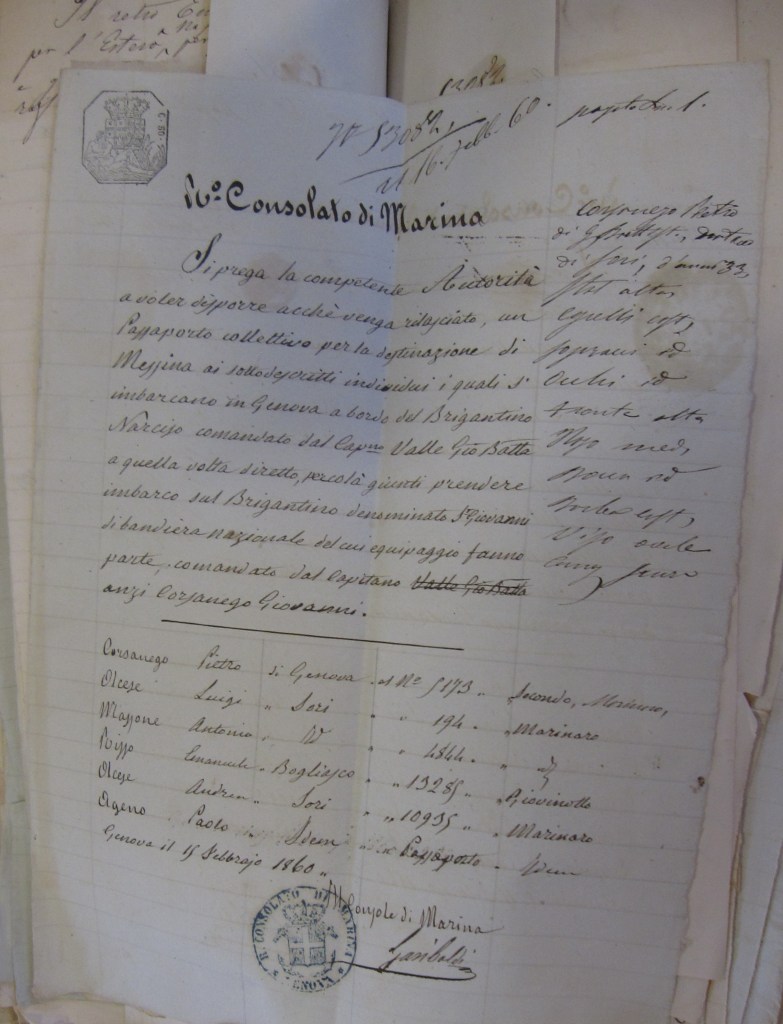
Here is another case of a multiple request to obtain passports: in this case, they were seamen and they needed the document to be able to sail to Messina, where they were going to reach the vessel they were working on.

This is really a document that tells a story!

A passport that was returned to the Questura after the journey: this document actually traveled around the world in his owner’s pocket.

Its folds, its tears, all the stamps and notes tell the story of an adventure!

IS ONLINE RESEARCH POSSIBLE?

After seeing the conditions of these documents, I bet you are all wondering if there is a quick way out: were these documents scanned or indexed?

Last time I went there (March 2024) the staff of the State Archive told me someone is going to scan the documents and put them online. No date knowm, which means that it may take 1 year, 10 years, or perhaps the project will be canceled.

Anyway, a part of these documents (indexed!) is already available online on the following website, even if I am not able to tell which years are included.

http://immigrants.byu.edu/

I hope you found this article interesting. Leave a comment if you did, and feel free to tell me your experience about old Italian passports.

Inventario dell’Archivio Storico del Comune di Chiavari

Premetto che non ho nulla a che fare con il Comune di Chiavari e che – per ora – non ho neppure visitato il loro archivio.

Tuttavia, in vista di una ricerca che dovrò fare, ho richiesto informazioni e soprattutto un INVENTARIO dei fondi custoditi, che sono stati recentemente restaurati dopo essere rimasti abbandonati e inaccessibili per 60 anni!

Ecco l’inventario che mi è stato inviato. Si tratta di 3 documenti in Excel:

  • L’inventario del piano terra è composto al suo interno da 3 fogli
  • L’inventario del piano ammezzato è composto al suo interno da 4 fogli
  • L’inventario del piano secondo è composto da 1 solo foglio

Per ulteriori informazioni potete contattare la gentilissima ed efficientissima responsabile:

Dott.ssa Barbara Bernabò

0185 365339

barbara.bernabo@comune.chiavari.ge.it

https://trasparenza.comune.chiavari.ge.it/archivio3_personale_0_54856_68_1.html

Foto in evidenza: http://www.sa-liguria.beniculturali.it/home/index.php?option=com_content&view=article&id=266&catid=15&Itemid=167

How to understand FIRST NAMES

I was inspired for this series of posts by the many requests for help that are posted on Facebook groups, where assistance in understanding handwritten records is asked.

Handwriting can be an issue, and not only for foreigners. Sometimes, even Italians struggle with unintelligible words and sentences.

Well, believe it or not, in some cases it is possible to by-pass the handwriting problem.

We could call it…

INVESTIGATE INSTEAD OF INVENT

Here is my second post and it is dedicated to FIRST NAMES

(the previous one was dedicated to PLACE NAMES, here is the link, if you missed it:

https://egancestryresearch.com/2022/02/15/how-to-understand/)

I am not going to teach you how to read a particular calligraphy. I am going to give you some hints which may be helpful to interpretate the correct name.

INFO AND TIPS ABOUT FIRST NAMES

  1. Italian names follow the grammar rules for the Italian language.

For example, the letter T is never preceded by M: it should be preceded by N.

The following transcription, for example, is wrong: the right name can only be Costantino.

Also, the letter Q is always followed by U. The below name cannot exist is Italy, and its correct spelling is Pasqua.

Some random rules, then: the letters C, D, F, G, L, R, S, T, V, Z are not preceded by M, they must be preceded by N.

Examples: Concetta, Sandro, Angelo, Enrico, Anselmo, Antonio, Enzo.

The name Amleto is an exception because it is imported from a foreign language.

The letters P and B are not preceded by N, they must be preceded by M (Ambrogio) except in the first names which are composed by Gian + another name: Gian+Piero = Gianpiero; Gian+Paolo = Gianpaolo.


2. The great majority of Italian given names are always the same. Inventing new names was very rare among our ancestors. So, do not crash your head for something new, as it is probably a very common name. In the following example: Feresa does not exist, the name is surely Teresa.

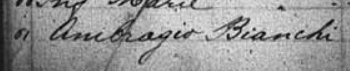
The same for this hard-to-believe Anibragio, which can only be Ambrogio


3. Check a list of Italian first names, for example

http://www.nomix.it/nomi-italiani-maschili-e-femminili.php

or other similar websites. I am sure you will find the mysterious one of your ancestor!


4. It was very common to honor relatives or godparents giving a newborn their same name, so a first name is often repeated in the family: check other relatives to figure out if the mystery name appears in other occurrences.


5. In some areas of Italy, though, the tendence to give a newborn a brand new, unique name was very common. In Toscana and Emilia Romagna, for example. In these regions you may actually stumble upon very strange first names. In the following case, the son was baptized as D’Artagnan (parents were eventually fans of the Three Musketeers!)


6. If the name looks – or actually is – very peculiar, check the protector saint of the town, or the saint to whom the parish is dedicated: it can be a clue.

For names of saints – even the most unlikely – check: http://www.santiebeati.it/nomi/

In the following example, the name is Genesio: very peculiar, but absolutely common in the town of origin of this person. Saint Genesio (whoever he was) is the town protector.


7. Two names were often joined together to form a composed name:

Maria+Anna = Marianna

Giovanni+Luca = Gianluca

Michele+Angelo = Michelangelo


8. In handwritten records, names were often abbreviated:

M. or M.a for Maria

G.ppe for Giuseppe

Gio.Batta for Giovanni Battista

D.co for Domenico

Ant.o for Antonio

Vinc.o for Vincenzo

Cat.a for Caterina


9. Sometimes, calligraphy required the first, capital letter of a name to be written in a more sumptuous way, which is today hard to understand. If you can’t get a clue about the name, disregard the first letter and try to identify the name basing on the other letters.


10. In Italian, Don is no name: it is a title of respect for a noteworthy person in town, or for a priest. The same for Donna: it is the feminine version of the title Don.


11. Of course, if you can, check multiple records containing the same name, including signatures


Remember: the correct spelling is always Giuseppe!

The spelling Guiseppe is wrong!

The same for Giulio (correct spelling) who is not Guilio.